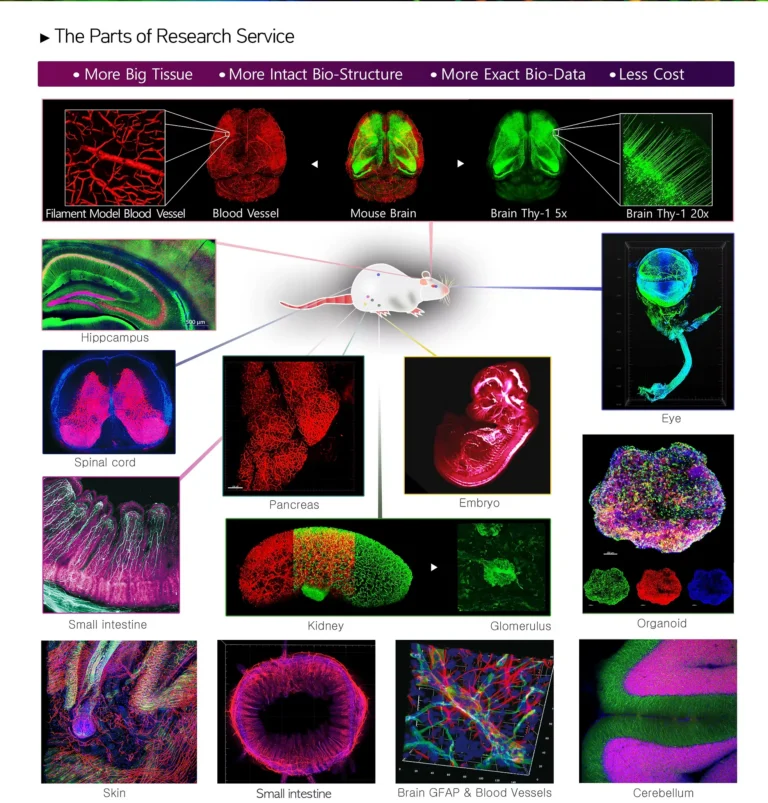
Meet the Binaree Product Line: Which Tissue Clearing System Is Right for Your Lab?
“Tissue clearing” isn’t one product — it’s a small ecosystem of reagents and, in Binaree’s case, an optional automated system built around it. Choosing the


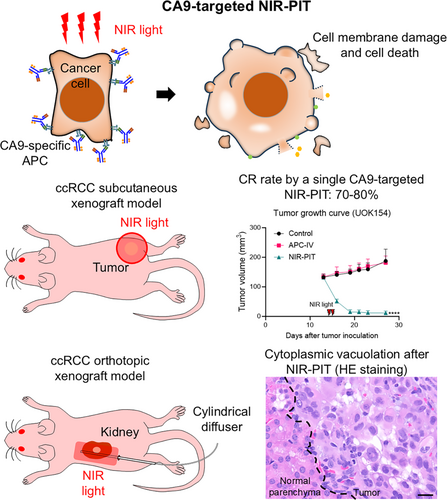
Recent preclinical research by the laboratory of Dr. Hisataka Kobayashi (Director of Molecular Theranostics, NIH) explored the potential of carbonic anhydrase‑9 (CA9) as a theranostic target for clear cell renal cell carcinoma (ccRCC). The study evaluated near‑infrared photoimmunotherapy (NIR‑PIT) using an anti‑CA9 monoclonal antibody conjugated with the IR700 dye. This approach selectively targets CA9‑expressing tumor cells and induces cytotoxicity upon near‑infrared light exposure.
CA9 is a transmembrane enzyme overexpressed in ccRCC and represents a promising target for selective tumor therapy. In vitro experiments demonstrated specific binding of the CA9‑IR700 conjugate to ccRCC cell lines and light-dependent cytotoxic effects. Flow cytometry and viability assays confirmed that NIR irradiation induced targeted cell death without affecting CA9-negative cells.
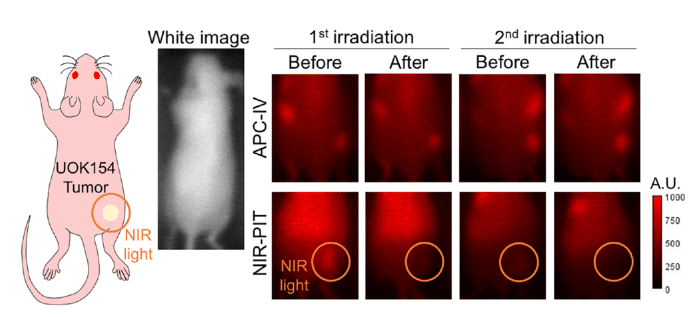
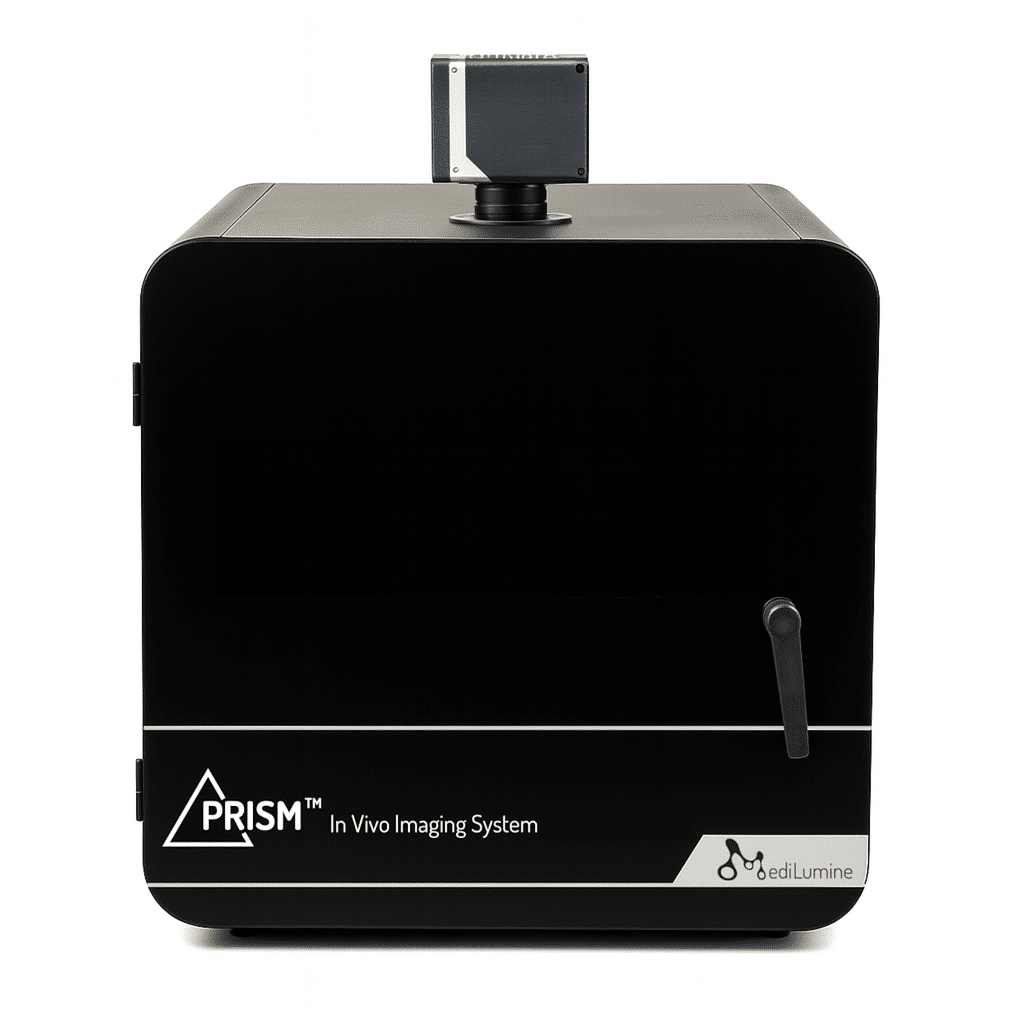
The study employed the PRISM in vivo imaging system to monitor fluorescence distribution and treatment efficacy in live animal models. PRISM’s sensitive EMCCD-based detection allowed high-resolution visualization of the IR700-labeled antibody in subcutaneous xenograft tumors. Fluorescence imaging provided real-time confirmation of conjugate accumulation at tumor sites and immediate photobleaching following NIR light exposure, reflecting the activation of the photoimmunotherapy agent.
Longitudinal imaging enabled quantitative assessment of treatment delivery and tumor response. By measuring fluorescence intensity before and after irradiation, researchers optimized the timing of NIR-PIT and evaluated therapeutic effects with high precision.
In treated animal models, NIR-PIT produced substantial tumor growth inhibition and improved survival. A significant number of treated subjects achieved complete remission following a single NIR-PIT session. Residual tumors retained CA9 expression, indicating potential for repeated treatment cycles if necessary.
The combination of CA9-targeted NIR-PIT with high-sensitivity optical imaging demonstrates the value of theranostic approaches in preclinical oncology research. The use of the PRISM system enabled precise monitoring of fluorophore-labeled therapeutic agents and contributed to robust evaluation of treatment efficacy. This approach highlights the potential of integrated imaging and therapy platforms to support the development of targeted interventions and real-time assessment strategies.
Fukushima H, Takao S, Furusawa A, et al. Carbonic anhydrase-9-targeted near-infrared photoimmunotherapy as a theranostic modality for clear cell renal cell carcinoma. Int J Cancer. 2025;156(12):2377-2388. doi:10.1002/ijc.35364
*This article is licensed under a Creative Commons Attribution 4.0 International License, which permits use, sharing, adaptation, distribution and reproduction in any medium or format
“Tissue clearing” isn’t one product — it’s a small ecosystem of reagents and, in Binaree’s case, an optional automated system built around it. Choosing the
Designing a rigorous behavioral experiment is only half the challenge. Making it run reliably, trial after trial, session after session, is where most labs lose