Description
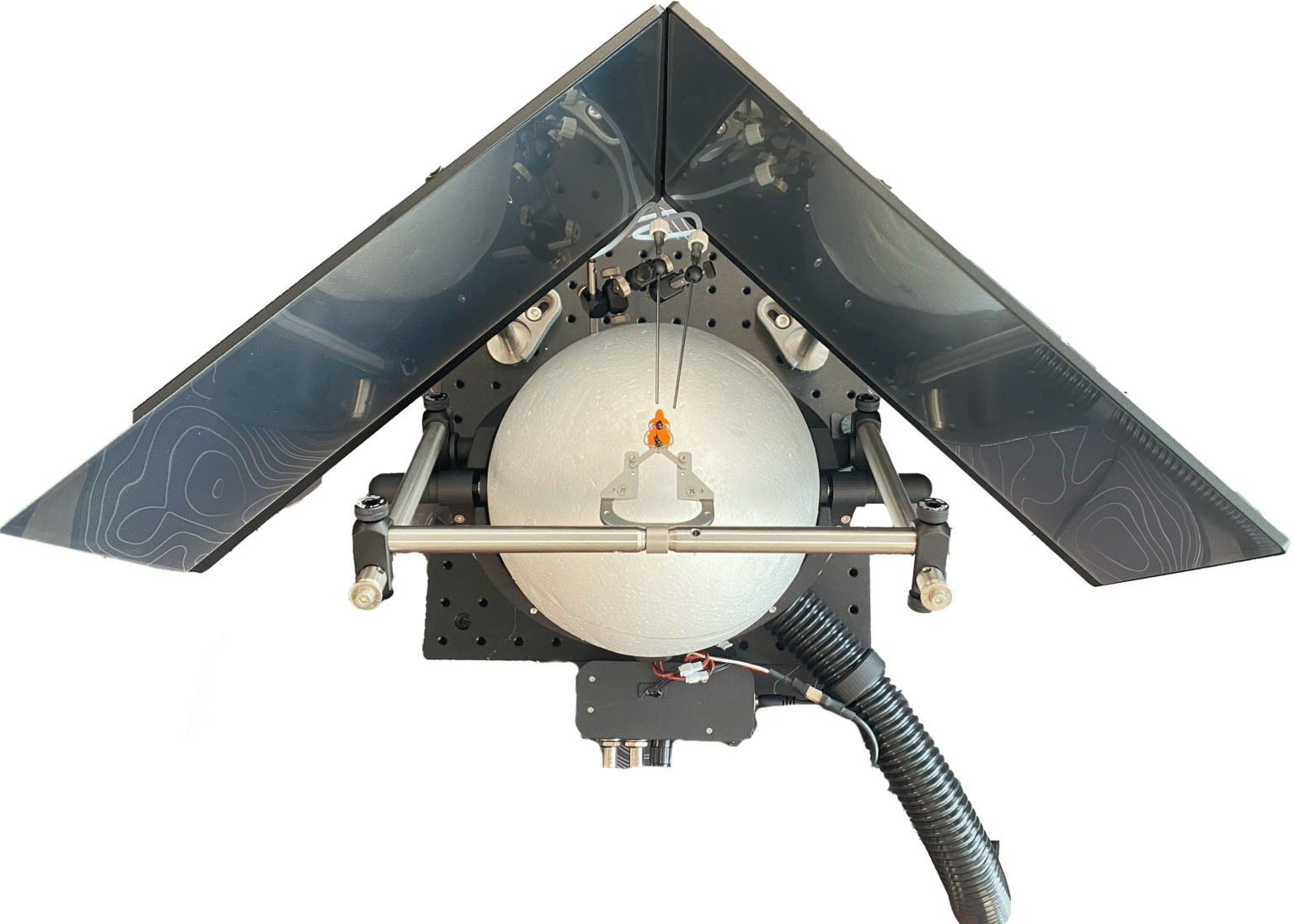
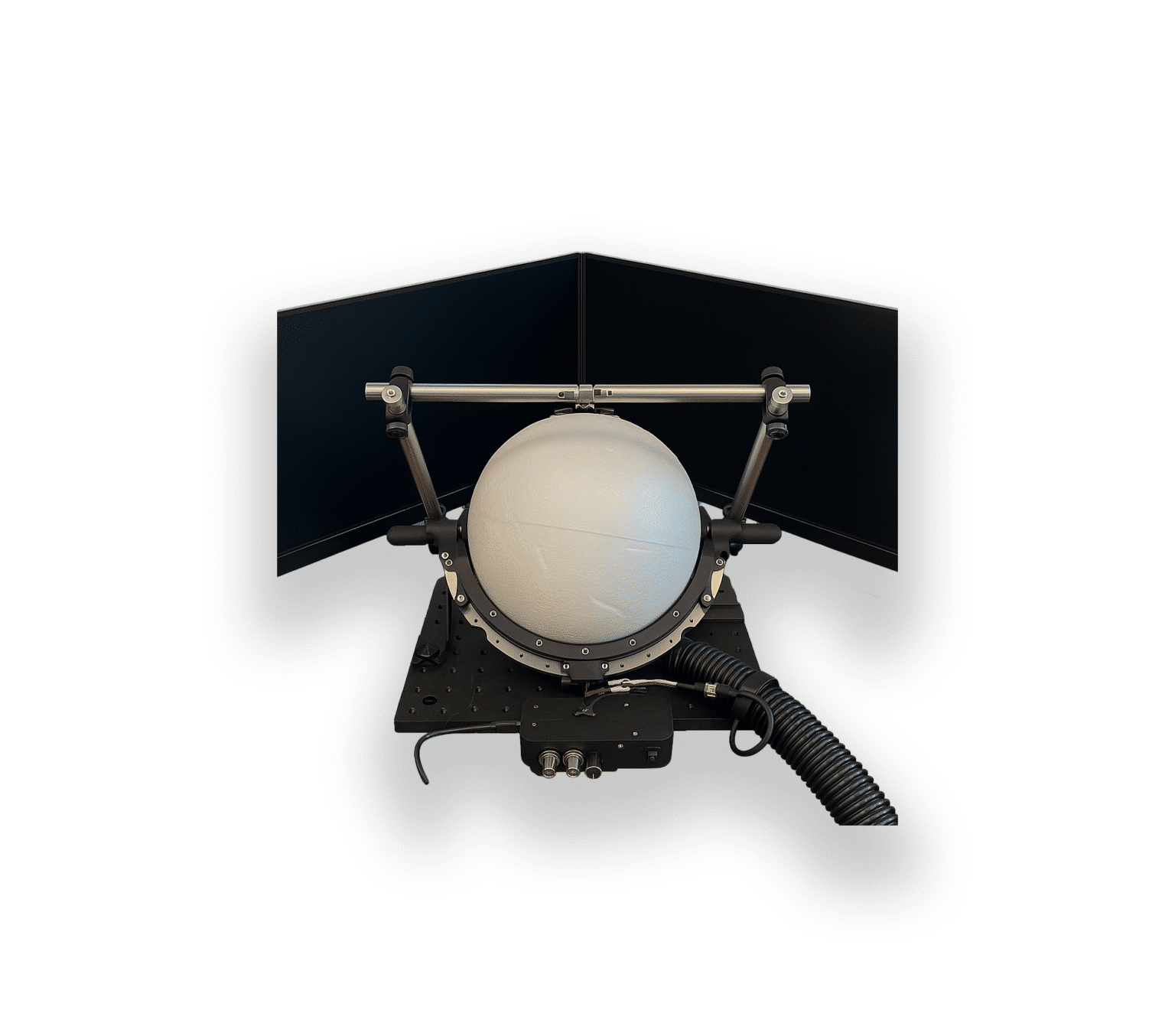
The Virtual Reality Dual Display System for Mice offers a sophisticated, screen-based solution engineered to create highly immersive visual environments for rodent behavioral experiments. Featuring two 15.6″ monitors, each delivering a crisp 1280 × 720 resolution, this system provides an expansive visual field exceeding 180 degrees. This wide-angle stimuli delivery is essential for head-fixed configurations, adaptable for use with or without treadmills, offering a robust alternative to head-mounted VR headsets. Its compact design ensures seamless compatibility with advanced neuroscience setups such as widefield imaging, two-photon microscopy, and optogenetics, integrating effortlessly into modern research workflows and enabling a broad spectrum of experiments including visual stimulation, retinotopy, and complex maze-based tasks.
Key Features for Enhanced Research
The Virtual Reality Dual Display System is engineered with features designed to optimize experimental design and data acquisition:
- High-Fidelity Visuals: Equipped with dual 15.6″ displays, each providing 1280 × 720 resolution for crisp, detailed visual stimuli.
- Expansive Field of View: Offers an immersive experience by covering over 180 degrees of the visual field, critical for naturalistic behavioral responses.
- Versatile Integration: Designed for compatibility with various experimental setups, including head-fixed paradigms, advanced imaging systems (widefield, two-photon), and optogenetic manipulation.
- Systemic Compatibility: Facilitates integration with existing motion tracking, behavioral monitoring, and other stimulation devices, supporting comprehensive experimental control.
Research Applications
This dual display system is an invaluable tool for researchers investigating a wide array of neuroscientific questions. It specifically supports studies focused on visually guided tasks, perception, navigation, decision-making, and sensorimotor processing. Furthermore, its capabilities are ideal for precise retinotopy mapping and for creating dynamic virtual environments, which are crucial for understanding spatial cognition and learning mechanisms in rodents.