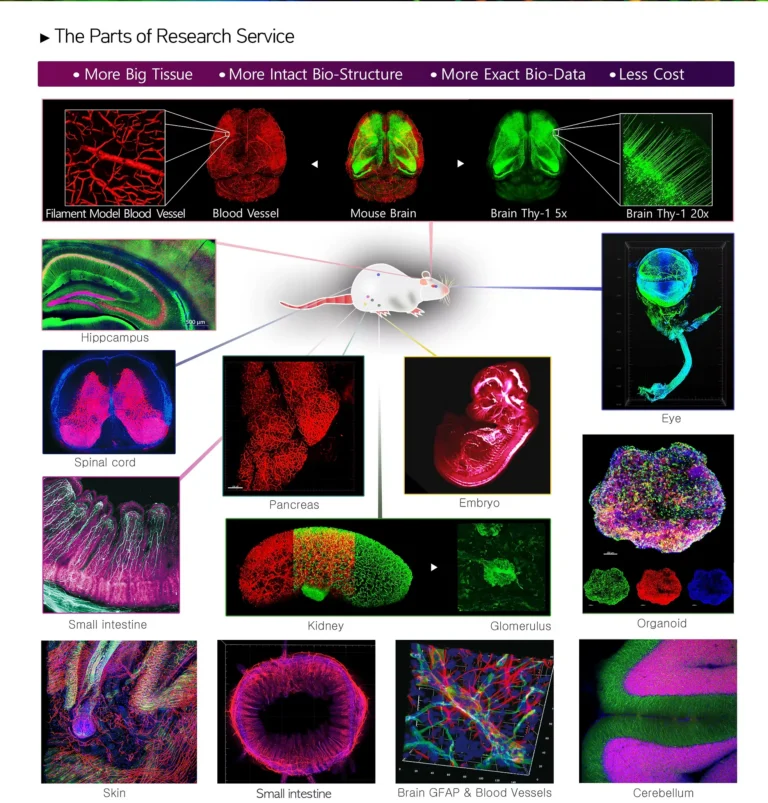
Meet the Binaree Product Line: Which Tissue Clearing System Is Right for Your Lab?
“Tissue clearing” isn’t one product — it’s a small ecosystem of reagents and, in Binaree’s case, an optional automated system built around it. Choosing the


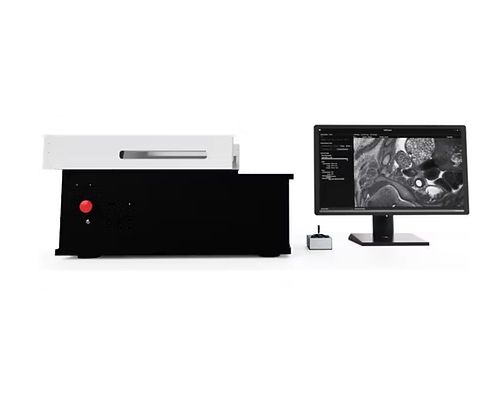
What if you could visualize your specimen in true 3D at micron-scale resolution, without tissue clearing, without alignment errors, and without the resolution limits of conventional imaging?
The HREM 3D Episcopic Imaging System, developed by Indigo Scientific, represents a fundamental shift in how researchers approach 3D imaging. This is not just another upgrade. It is a new standard for capturing biological structures with clarity, precision, and context.
For years, researchers have had to compromise when choosing imaging methods.
MicroCT offers whole-sample imaging, but struggles with soft tissue contrast and cannot achieve micrometer-scale resolution across large specimens. Meanwhile, Confocal Microscopy and Light-Sheet Microscopy require tissue clearing, which is time-intensive and can introduce artifacts, especially in dense or calcified tissues.
Even Histology, the gold standard for resolution, comes at a cost. Physical sectioning disrupts 3D structure, often leading to distortion, misalignment, and loss of spatial context.
The result is a persistent trade-off between resolution and anatomical integrity.
The HREM 3D Episcopic Imaging System eliminates this compromise through High-Resolution Episcopic Microscopy.
Instead of imaging thin sections individually, HREM captures images directly from the blockface of a resin-embedded specimen during automated sectioning. Each image is inherently aligned, producing perfectly registered stacks that reconstruct into accurate, distortion-free 3D volumes.
No clearing. No post-processing alignment. No loss of context.
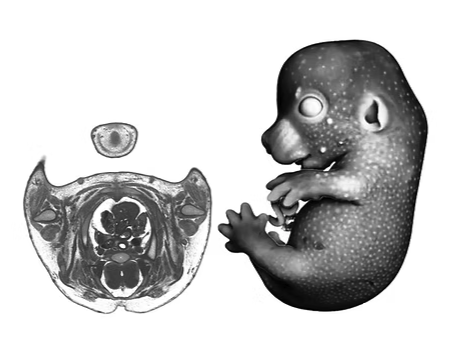
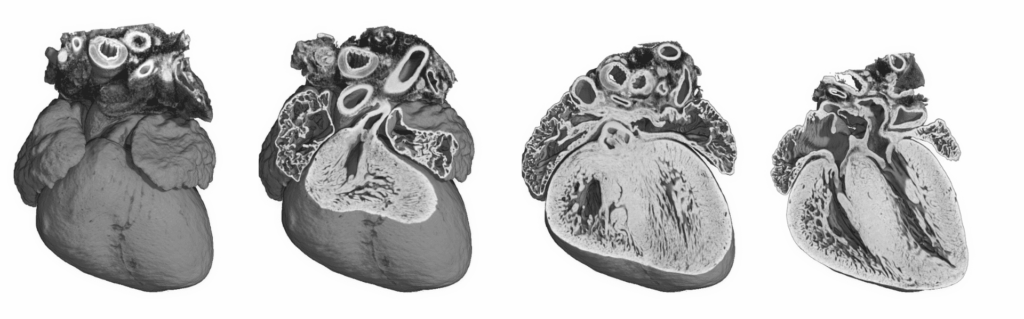
The impact of HREM is already being felt across a wide range of disciplines.
Capture the full 3D architecture of mouse embryos with histological clarity. From whole-body phenotyping to detailed organ morphometry, HREM preserves both resolution and spatial context.
As the field moves toward New Approach Methodologies, HREM offers a powerful tool for 3D characterization of organoids and other in vitro models. Capture internal architecture, lumen formation, and cellular organization at micron-scale resolution — without sectioning artifacts or clearing-induced distortion — making HREM ideal for validating and advancing NAM-based workflows.
Visualize brain structures, connectivity, and fine morphology at a level that traditional imaging modalities cannot achieve. HREM bridges the gap between macro-scale imaging and cellular detail.
Screen structural phenotypes across cohorts with quantitative 3D morphometrics, even in dense tissues that previously required complex and time-consuming preparation.
Watch how the HREM 3D Episcopic Imaging System captures a complete 3D mouse embryo with exceptional clarity and detail.
“Tissue clearing” isn’t one product — it’s a small ecosystem of reagents and, in Binaree’s case, an optional automated system built around it. Choosing the
Designing a rigorous behavioral experiment is only half the challenge. Making it run reliably, trial after trial, session after session, is where most labs lose